
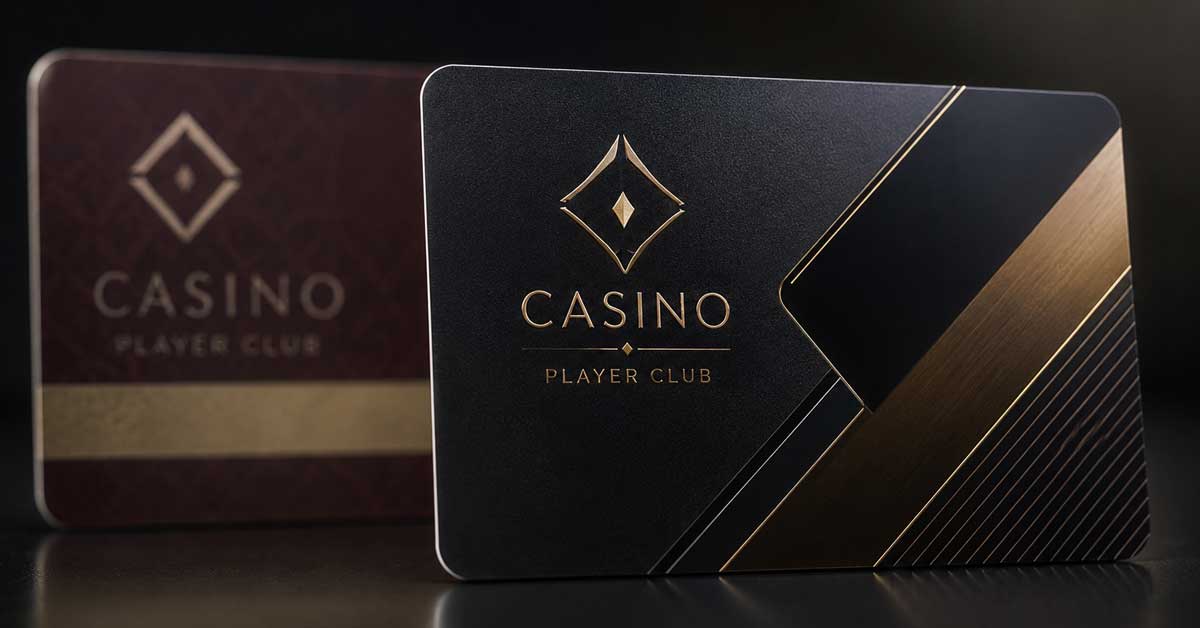
Casino rebranding goes beyond a new logo. See how card design, colors, typography, finishes, personalization and technology should evolve too.
A new logo is easy to spot. New colors, typography and signage quickly signal that a brand has changed.
Rebranding is rarely complete when only the most visible elements are updated.
For businesses that use physical identification or membership cards, those cards remain in customers’ wallets long after a new website goes live or new signage appears. If they still carry an old logo, outdated colors or a previous visual identity, the brand effectively exists in two versions at the same time.
That is why casino cards should be part of the rebranding process from the beginning, not treated as an afterthought.
Casino rebranding cards – in short
- A rebrand isn’t complete when only the logo, website and signage change — cards stay in players’ wallets and quietly keep the old identity alive.
- Copy-pasting the new logo onto the old card layout rarely works; the card usually needs to be redesigned as its own application of the new brand guidelines.
- Different card types (standard, VIP, staff, access) don’t need to look identical, but they do need to read as one brand — consistent typography, logo placement and visual language across all of them.
- Premium finishes (metallic foil, Spot UV, embossing) should reinforce an existing brand element, not get stacked on for effect.
- Card technology (RFID, magnetic stripe, barcodes, variable data) has to be planned alongside the redesign, not after it — and existing stock needs a clear transition plan so old and new designs don’t circulate at random.
A Small Card Carries a Large Part of the Brand
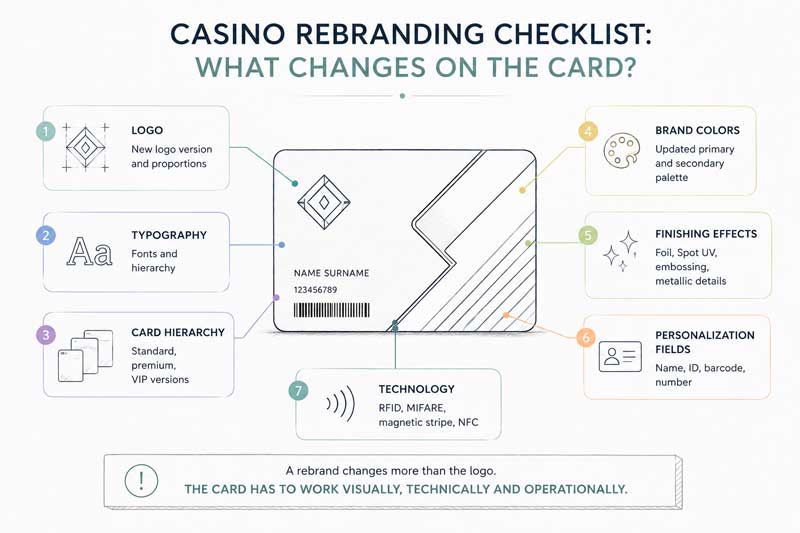
A plastic casino card may occupy only a few square centimeters, but it contains many recognizable elements of a visual identity:
- logo
- brand colors
- typography
- graphic patterns
- photography or illustrations
- card hierarchy
- finishes and materials
- information layout
When any of these elements changes during a rebrand, the existing card design can suddenly look disconnected from the rest of the casino brand.
Imagine entering a newly redesigned property with updated interiors, new signage and a completely different visual identity — only to receive a card using the previous logo and color palette.
The card still works technically, but visually it belongs to another brand era.
Rebranding Is More Than Replacing the Logo
One of the most common mistakes when adapting physical cards to a new brand identity is simply replacing the old logo with the new one.
That can work in some cases, but a true redesign usually requires more.
A rebrand may introduce:
- new primary and secondary colors
- different typography
- simplified logos
- new iconography
- changed photography style
- new brand patterns
- updated tone and positioning
All of these elements affect how the card should look.
A casino card design created around the previous identity may not provide enough space for the new logo or may use layouts that no longer match the new visual system.
Instead of treating the card as an existing template that needs a new logo, it often makes more sense to treat it as another application of the new brand guidelines.
A rebrand should feel consistent across every touchpoint — including the card. Cards Print can help translate your new visual identity into a card that is technically compatible, visually aligned and ready for production.
One Brand, Several Card Designs
Another challenge appears when a company uses several different card types.
There may be different versions for:
- standard members
- premium or VIP categories
- staff
- access control
- events
- temporary visitors
- promotional editions
The cards do not necessarily need to look identical.
They do, however, need to look as though they belong to the same brand.
A strong card system can use different colors, finishes or graphic details to separate categories while keeping common elements such as typography, logo position and overall visual language consistent.
This is particularly important during a rebrand because redesigning each card independently can quickly result in several visually unrelated products.
Premium Finishes Can Become Part of the New Identity
Rebranding is also an opportunity to reconsider how the card itself is produced.
Brand identity does not end with graphic design. The physical surface of a card can contribute to the way the brand is perceived.
Depending on the design, options can include:
- metallic foil
- Spot UV
- embossing
- matte or glossy surfaces
- transparent elements
- metallic effects
- special textures
The goal should not be to add as many effects as possible.
A premium effect on cards works best when it supports an existing element of the brand.
For example, a metallic detail can emphasize a logo or a specific graphic element, while Spot UV can create contrast without changing the main color palette.
The production technique becomes part of the visual language rather than decoration added at the end.
Think About Existing Cards Before Launch Day
There is also a practical side to rebranding physical cards.
Large quantities of cards may already exist in stock.
Before ordering a redesigned version, companies should consider:
- how many old cards remain
- whether they will continue to be issued
- when the new design should enter circulation
- whether existing cards remain technically compatible
- whether different locations will transition at the same time
- whether several card categories need to be replaced simultaneously
A planned transition can prevent a situation where old and new designs are issued randomly for months.
In some cases, existing cards can remain valid while only newly issued cards receive the new identity. In others, replacing an entire card series may make more sense.
The right approach depends on both branding requirements and operational realities.
Don’t Redesign the Card Without Checking the Technology
The visual redesign is only one part of the process.
Existing cards may contain technologies such as:
- magnetic stripes
- barcodes
- QR codes
- RFID
- MIFARE
- NFC
- variable data
- unique identification numbers
A new design therefore has to respect more than brand guidelines.
Certain areas may need to remain free for encoding, personalization or machine-readable elements. Changing the position of a barcode, magnetic stripe or variable field without considering production requirements can create unnecessary problems later.
For that reason, card design and card production should ideally be considered together.
A Rebrand Is a Good Time to Simplify
Years of small changes can make physical cards unnecessarily complicated.
New information is added. Another logo appears. An extra line of text becomes necessary. A promotional message remains long after the campaign has ended.
Eventually, the card becomes crowded.
A rebrand creates a useful opportunity to ask a simple question:
What really needs to be on this card?
Removing unnecessary elements can often make the new identity stronger than adding additional graphics.
A cleaner card also gives important elements — particularly the logo, member information and key brand details — more room to work.
FAQ About Rebranding Casino Cards
1. Should all existing casino cards be replaced after a rebrand?
Not necessarily. In many cases, existing cards can remain valid until they expire or are replaced, while newly issued cards use the updated design. The right approach depends on stock levels, card technology and how quickly the new identity needs to become visible across all physical touchpoints.
2. Can a casino keep the same card technology and change only the design?
Yes. If the existing RFID, MIFARE, magnetic stripe or other technology still works with the current system, the visual design can often be updated without changing the technical specification of the card.
3. How early should casino cards be included in a rebranding project?
Ideally, card production should be considered while the new visual identity is still being finalized. This gives designers and manufacturers enough time to test layouts, finishes, personalization fields and technical requirements before the new brand launches.
4. Can old and new casino card designs remain in circulation at the same time?
Yes. A phased transition is possible, especially when replacing a large number of existing cards at once would create unnecessary waste or operational complexity. Clear internal rules help ensure that new cards are introduced consistently.
5. Should a casino rebranding project include new card packaging or presentation materials?
If cards are delivered in sleeves, holders, welcome packs or other branded materials, those elements should also be reviewed. Keeping the card and its presentation materials visually aligned creates a more consistent physical expression of the new brand.
The Card Should Look Like It Belongs to the New Brand
Websites can be updated overnight.
Signs can be replaced.
Advertising campaigns can launch on a specific date.
Physical cards move differently. They remain in circulation, sit in wallets and often continue being used long after other brand materials have changed.
That makes them easy to overlook during a rebrand — and precisely why they matter.
If a card is one of the physical objects carrying your company’s identity, it should be included in the same visual system as everything else.
At Cards Print, card production can combine custom design requirements with personalization, special finishes and different card technologies, allowing a redesigned card to work both visually and technically.
A rebrand should not stop at the screen. It should reach the things people actually hold in their hands.