

Learn how casino cashless cards power casino cashless systems, supporting cashless gaming, secure transactions, and efficient casino payment operations.
Casinos have always been places where money moves fast. For decades, that movement depended almost entirely on cash: bills at the cage, chips on tables, tickets in machines. While this model still works, it creates friction that modern casino operations increasingly want to avoid. Long lines, manual handling, counting errors, and limited visibility are all part of a cash-heavy environment. This is why casino cashless systems are gaining momentum across the industry.
The idea behind cashless gaming is simple: reduce reliance on physical cash and replace it with controlled, digital value flows that are faster, safer, and easier to manage.
Within this shift, casino cashless cards play an important role.
They give players a familiar and easy way to access funds, while giving casinos more control over transactions and data. Together, these elements form cashless gaming systems that are not about removing money from casinos, but about moving it more intelligently.
As player expectations evolve and operational pressure grows, cashless gaming is no longer just an innovation—it is becoming the new baseline for efficient casino floors.
What Are Casino Cashless Systems?
At a basic level, casino cashless systems allow players to fund their play and move value without constantly using physical cash. Instead of carrying bills from the ATM to the cage and then to the machine or table, value is handled digitally through a controlled system.
This does not mean casinos must eliminate cash completely. In most cases, cashless systems work alongside traditional methods, gradually reducing how often cash needs to be handled.
The key difference is that value movements are tracked and managed by the system rather than by manual processes.
When a player loads funds, transfers value, or ends a session, the system records each step. This creates a clear overview of what happens on the casino floor throughout the day.
Many people associate cashless gaming with digital payments in casinos, but the system goes beyond payment alone. It includes authorization rules, limits, reporting, and integration with existing casino payment systems.
Well-designed cashless gaming systems help casinos run smoother operations, reduce waiting times, and improve overall control without making the experience complicated for players. From the casino’s perspective, the biggest advantage is clarity: fewer blind spots, fewer manual steps, and more reliable information.
Casino Cashless Cards as the Foundation of Cashless Gaming
Although mobile payments receive a lot of attention, casino cashless cards remain one of the most practical tools for cashless gaming on the casino floor. Cards are familiar to players, easy to use, and well suited to a physical gaming environment.

A cashless card can represent the player’s identity and access to funds in a simple way. Players do not need to learn new apps or rely on their personal devices to get started.
From the casino’s side, cards offer consistency. Devices, readers, and staff procedures can all be built around a standard card experience. This reduces confusion and makes it easier to scale cashless gaming across the property. On a busy casino floor, speed matters. Cards allow quick interactions at machines or tables without delays.
One of the benefits of casino cards is that they also work well with loyalty and recognition programs, helping casinos connect cashless gaming systems with player engagement strategies. In many casino solutions, cards act as the bridge between payment, play, and data. They keep the experience simple for the player while supporting the casino’s need for control, tracking, and reporting. This is why casino cards continue to be essential even as cashless technology evolves.
Cards Make Cashless Feel Real
Cashless systems can easily feel abstract to players. When value exists only in software, on screens or in the background, it can feel distant and hard to trust.
A card changes that perception instantly. It gives cashless a physical form – something the player can hold, use, and recognize. The system is no longer “somewhere in the backend.” It is right there, in the player’s hand.
This physical presence matters more than it may seem.
People naturally trust things they can see and touch, especially in environments where money is involved.
A card turns an invisible process into something concrete and understandable. It makes cashless feel structured, intentional, and real rather than experimental or temporary. In that sense, cashless truly becomes part of the casino experience only when it has a physical anchor. Without that anchor, cashless can feel like an idea. With a card, it feels like a system that belongs on the casino floor.
The Psychology of Friction
Small interruptions have a bigger impact on player behavior than most casinos realize. Every time a player has to leave the floor, to visit the ATM, stand in line, or reload funds, the experience is broken.
These moments may seem minor, but they interrupt focus and momentum.
A cashless card helps remove many of these micro-interruptions. Instead of stopping play, players can continue smoothly, without mentally “stepping out” of the experience. This doesn’t change behavior by encouraging spending, but by preserving flow. When the process feels continuous, players stay engaged longer and are less likely to walk away mid-session.
The difference is subtle, but meaningful.
Fewer breaks mean fewer chances for distraction, fatigue, or second thoughts. This is why cashless casino cards quietly shape behavior without pressure or persuasion. They don’t push players to play more – they simply remove the small frictions that give players reasons to stop.
Cashless Casino Cards vs Traditional Casino Payment Systems
Traditional casino payment systems rely heavily on physical cash. While familiar, this approach creates several challenges.
- Cash must be counted, transported, stored, and secured. Each step introduces time delays and risk.
- Disputes often take longer to resolve because information is scattered across manual records.
Cashless casino cards change this dynamic. Instead of focusing on handling money, casinos focus on managing value digitally. Transactions happen faster, and records are created automatically.
This does not just save time – it improves accuracy.
When value movements are logged in real time, casinos gain a clearer picture of what is happening on the floor.
Players benefit as well. They spend less time waiting and more time playing.
Staff spend less time on repetitive tasks and more time supporting guests.
In this sense, cashless gaming systems are an upgrade to how casinos work, not a replacement for the core gaming experience.
If you’re exploring how cashless cards could fit into your casino environment, talk to us. We help casinos design and produce cards that work seamlessly with their systems and the way players actually behave.
Cashless Cards as a Symbol of Status
On today’s casino floor, cards are no longer just a way to access funds or start a game. They have taken on a different meaning.
A quality casino card in a player’s hand often represents recognition and trust. It quietly signals that the casino knows who the player is and values their presence. For many guests, especially regular and high-value players, this feeling matters.
Being recognized without needing to ask or explain creates confidence and comfort.
A well-designed card also carries a sense of belonging. It separates a registered, known player from someone who is just passing through. This difference is subtle, but it strongly influences how players perceive their experience.
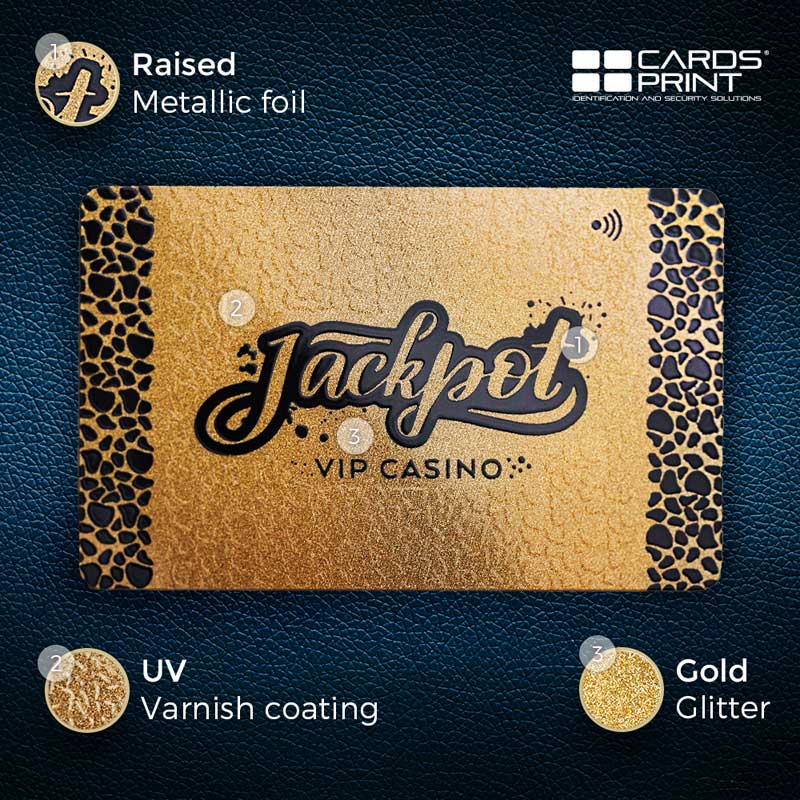
From the casino’s side, this status element supports long-term relationships. When a card represents more than access, when it represents identity, players are more likely to return and stay engaged.
In that sense, cards work on two levels at once: they make the system easier to use, and they strengthen the emotional connection that keeps players coming back.
Cashless Technology in Casinos and the Modern Casino Floor
A modern cashless casino floor is designed to reduce friction and improve flow. Cashless technology in casinos supports faster interactions and more consistent experiences.
- Players can move between games without repeated trips to the cage.
- Staff can focus on service rather than cash handling.
- Managers can see activity patterns as they happen.
Digital payments in casinos are part of this picture, but the real impact comes from how everything connects.
Cashless sytstems help casinos understand player behavior, peak times, and floor performance. This information can be used to improve layout, staffing, and promotions.
Cards play an important role here as well. Casino cashless cards provide a stable and easy interface that works across different areas of the floor. They help unify the experience while keeping the system manageable.
Security and Control in Casino Cashless Systems
Security is a constant concern in casino operations. Physical cash always carries risk.
Casino cashless cards reduce that risk by limiting how much cash moves through the floor and by creating digital records of transactions.
Every casino cashless transaction can be traced, making it easier to investigate issues and resolve disputes.
Rules and limits can be enforced automatically, reducing reliance on manual checks.
Casino cashless cards also help maintain consistent access control. They allow casinos to manage permissions clearly and securely. This combination of automation and traceability improves overall control without creating barriers for players.
Security becomes part of the system, not an extra layer added later.
Frequently Asked Questions About Casino Cashless Cards
What are casino cashless cards?
Casino cashless cards are physical cards that allow players to access funds and play on the casino floor without using cash for every transaction. They connect the player to the casino’s cashless system.
How do casino cashless cards work?
Players use the card to load value and start playing at machines or tables. The card identifies the player and enables transactions within the casino system without repeated cash handling.
Are casino cashless cards safe to use?
Yes. Casino cashless cards reduce the amount of physical cash on the floor and create a digital record of transactions, which improves control and security for both players and casinos.
Do players need a smartphone to use casino cashless cards?
No. Casino cashless cards work independently of mobile apps, making them accessible to all players regardless of device or technical skills.
Why do casinos prefer cashless cards over app-only solutions?
Cards are simple, familiar, and reliable on a physical casino floor. They provide a clear, physical way for players to interact with cashless systems without added complexity.
The shift toward cashless gaming reflects broader changes in how people expect to pay and interact. Players are comfortable with digital value and expect speed and simplicity. Casinos need efficiency, control, and insight.
Cashless cards meet both needs. They improve the player experience while strengthening operations.
As adoption grows, cashless gaming will feel less like an innovation and more like a standard. Casinos that invest early in well-designed casino cashless cards position themselves for smoother operations, better data, and a more competitive future.
If you’re planning that transition, we can help you design and produce casino cashless cards that fit your systems, your floor, and the way your casino operates.